Are Premium Junior Race Skis Worth It?
Let’s get the answer out of the way first: yes, premium race skis are absolutely worth it. For serious racers who are skiing regularly, training hard and competing often, a good pair of race skis will allow for better control, tighter turns and faster speeds down the course.
On the other hand, if you’re a casual holiday skier, then a pair of premium race skis might not be worth the expense and may even make skiing more difficult for you – in which case you should read our article on all mountain, freeride and piste skis to help you choose a ski.
But if you’re a competitive skier or a parent to a young ski racer, then this guide will help you to understand the difference between race skis and recreational skis, the advantages of different race ski types, and our top recommendations for race skis.
What Actually Makes a Race Ski Different?
The difference between recreational skis and premium race skis comes down to more than just the higher price tag. Race skis are built with constructions specifically engineered for competitive skiing.
The key technical characteristics of race skis:
- Turning Radius – This is the arc the ski carves when put on edge. Slalom skis have a short radius for tight, quick turns between gates whilst GS skis have a longer radius for wider arcs. The radius of a ski is designed for specific skiing disciplines, and choosing the wrong type for your discipline can have a huge impact on your ability to hit the gates.
- Flex – How stiff or soft the ski is along its length. Softer flex suits lighter, younger skiers who don’t have the strength or weight to pressurise a stiffer ski. Too stiff and the skis feel unresponsive and difficult to control; too soft and it lacks the energy and precision needed for racing.
- Torsional Rigidity – How resistant the ski is to twisting along its length. High torsional rigidity means the edge engages better on harder surfaces, great for grip on hard snow and dryslope racing.
Choosing the right type of ski allows for greater control and more stability at speed, allowing you to take the course with confidence.
Our Top Race Ski Recommendations
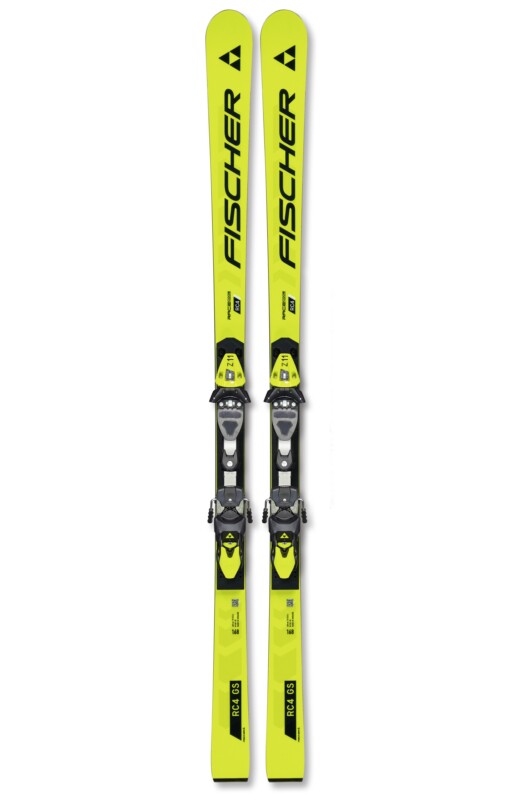
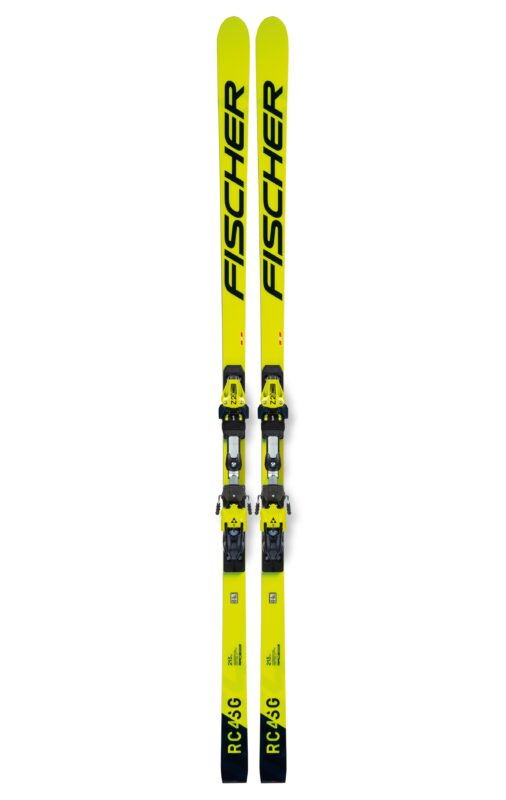
Fischer Junior Race Skis
Fischer are one of the most trusted names in ski racing globally. The Austrian brand has over 100 years of expertise in the sport. Their adult skis are worn by world-class athletes, and their junior skis offer the same technology proven in World Cup ski races, but redesigned with lighter, younger skiers in mind.
Fischer junior race skis offer a short turning radius and a softer flex that makes them ideal for developing racers without sacrificing race performance. The softer flex is the key feature, as small young racers often don’t have the body weight or muscular strength to pressurise a stiff race ski. A ski that’s too stiff for the skier will feel dead and unresponsive – this affects race speed but also risks the skier’s safety as they will struggle to control the ski. Fischer have specifically designed their junior race skis to be responsive for lighter skiers, rather than just giving young skiers a shorter version of an adult ski.
What We Love About the Fischer Junior Race Skis:
- Short turning radius for better performance over tight technical courses
- Softer flex tuned specifically for lighter, younger skiers
- Responsive without being demanding, ideal for beginner ski racers
- Over 100 years of skiing heritage, trusted by athletes across all disciplines
Fischer Junior Race Skis are Best For:
- Lighter junior racers starting out in competition
- Young skiers in club training programmes
- Racers in slalom and technical disciplines
-

Fischer RC4 Noize SL Jr. M-Plate
Price range: £369.95 through £539.95 View Product -
Fischer RC4 Noize SL Jr. M/O-Plate Jr.
£434.95 View Product -
Sale!

Fischer RC4 Worldcup GS Jr. M-Plate
Original price was: £779.95.£584.96Current price is: £584.96. View Product -
Sale!

Fischer RC4 WorldCup SG Jr H-Plate
Original price was: £1,199.95.£899.96Current price is: £899.96. View Product


Dynastar Junior Race Skis
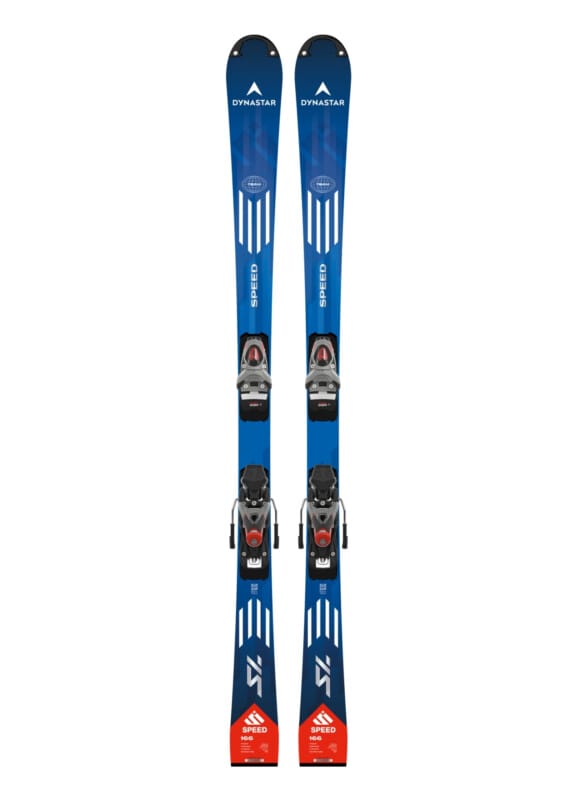
Dynastar is one of our most popular junior skis, and we sell more Dynastar skis than any other brand here at our Sheffield ski shop. That’s because Dynastar’s junior race ski range has excellent torsional rigidity without feeling stiff, meaning the ski resists twisting when you put it on edge, giving you clean, confident grip through turns. This makes it the perfect ski for hard snow and tough dryslopes, which is mainly what you’ll be racing on in the UK since we don’t have the same reliable snowfall as famous mountain resorts.
This is the main reason why Dynastar has become popular with young British ski racers – because it’s one of the best junior skis for dryslope surfaces.
What We Love About the Dynastar Junior Race Skis:
- Excellent torsional rigidity for consistent edge grip
- Brilliant on dryslope surfaces – which is what you’ll usually be racing on in the UK.
- Our most popular junior race ski brand
- Offers great control and feels firm without being stiff or inflexible
Dynastar Junior Race Skis are Best For:
- Dryslope racers skiing consistently on hard surfaces
- Junior club and regional competitors
- Developing racers looking for great edge grip


Rossignol Junior Race Skis
The Rossignol junior race ski range also deserves an honourable mention, as it gives a very similar performance to the Dynastar ski. It’s just a matter of skier preference whether you like Dynastar or Rossignol more, but there’s no major difference between them. If you’ve already got Rossignol race ski boots, it’s nice to have the option to match your skis with your boots.
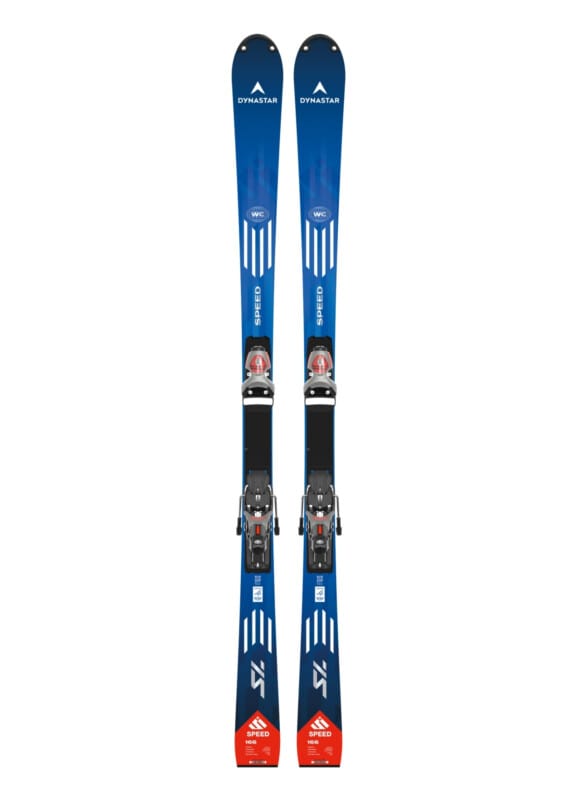
Dynastar Speed Omeglass WC FIS SL (R22) – The Step Up
If you’ve got an older skier, the softer flex of a junior ski might not give enough resistance, whilst an adult ski might still be too firm for them to apply pressure and have adequate control. The Dynastar Speed Omeglass WC FIS SL (R22) sits in the sweet spot between junior and adult race skis, making it an ideal next step for junior racers who’ve outgrown entry-level race skis, but aren’t quite ready for an adult ski.
It’s a competition-ready, FIS-compliant, World Cup-specification slalom ski with a short R22 radius that has a clear increase in stiffness compared with other junior race skis. This increased stiffness delivers extra energy and stability through turns, getting more juice from each arc when you’re able to pressurise the ski properly.
The key word here is “when,” as this ski is designed for racers who are physically and technically ready for it. Stepping up to a stiffer ski before you can handle it will reduce your control – this can really knock a racer’s confidence and in a worst-case scenario, it can lead to a higher risk of accidents. This ski is best for developed racers who are looking for something that pushes their progress further, but without going that full step forwards into adult skis.
What We Love About the Dynastar Speed Omeglass WC FIS SL (R22):
- Genuine World Cup specification – FIS-compliant for racers moving from club level into sanctioned competitions
- R22 short radius built for tight, technical slalom courses
- Step up in stiffness delivers more energy and precision through turns
- Ideal for junior racers ready to progress, but not yet ready for adult skis
The Dynastar Speed Omeglass WC FIS SL is Best For:
- Junior racers transitioning towards adult-level competition
- Club and regional racers stepping up to FIS-level equipment
- Older, more technically developed skiers ready for a stiffer ski
The Final Verdict: Are Premium Race Skis Really Worth It?
For serious, regularly competing racers, the answer is simple: yes.
A specially designed race ski gives completely different performance to a recreational ski. Race skis are built to handle the demands of racing, finely tuned to suit a specific discipline and offer precision throughout the course. They’re designed to be good at one specific thing, whilst a recreational ski is built for all-round skiing. Most racers will have at least two pairs of skis – one recreational set for relaxing, experimenting and fun family holidays, and a second race set specifically for training and competing.
The important thing is that the ski has to match the racer and the discipline. Even the best, most expensive pair of skis won’t improve your race speed if they’re the wrong fit for you. A ski that’s too stiff, too long, or the wrong radius for the discipline will be more of a hinderance your race performance rather than helping.
If you’re unsure which ski is the right fit for your racer’s level, discipline, and physical build, get in touch or pop in to see us at our Sheffield ski shop. We can help you choose the right ski as well as providing other services such as binding mounting, ski servicing and boot fitting (one of the most important pieces of gear is a perfectly fitted ski boot)!
Frequently Asked Questions
At what age should a junior skier move on to proper race skis?
There’s no strict age limit saying when a young skier should move on to a race ski – it’s more about their technical skill and race commitment. Once a young skier is serious about racing and they’re committed to training and competing regularly at club events, it’s worth looking into a junior race ski. Junior skis from Fischer, Dynastar and Rossignol are great first race skis for young ski racers, as they offer racing-specific features without being too physically demanding.
What’s the difference between a slalom race (SL) ski and a giant slalom (GS) race ski?
Slalom skis have a shorter turning radius designed for tight, quick turns between closely set gates. GS skis have a longer radius for wider, more powerful arcs on more open courses. The discipline you’re racing should determine which radius you choose.
How important is torsional rigidity and why does it matter for dryslope racing?
Torsional rigidity determines how cleanly the ski engages when you put it on edge. High torsional rigidity means the edge grips consistently without the ski chattering or washing out. This is ideal for hard snow and unforgiving synthetic dryslope surfaces.
How long should a pair of race skis last?
How long a pair of race skis last can vary based on how often you’re training and racing, but with proper care, servicing, and storage, a good-quality pair of race skis should last several seasons. Race skis that are regularly serviced and are properly cared for will last longer than skis that aren’t being maintained.
What’s the difference between junior and adult race skis beyond the size?
Junior race skis are built with softer flex profiles, specially designed to be suitable for lighter skiers who don’t have the strength or weight to pressurise an adult race ski effectively. An adult race ski will feel stiff, unresponsive, and difficult to control for a junior skier. For older or bigger ski racers with more muscular strength, a transitional ski that sits between adult and junior, such as the Dynastar Speed Omeglass WC FIS SL, may be a better fit.
Do race skis need special bindings?
Race skis require race-specific binding systems. The binding setup – including DIN settings and boot sole compatibility – is crucial as it ensures the ski disengages properly and will come off safely in an accident. That’s why you should always have race bindings set up and checked by a qualified technician.
